
One Isthmus, Every Car: Madison's Traffic Geometry
All of Madison must squeeze across a mile-wide neck of land — or around the Beltline. John Nolen Drive, East Washington, the Square loop and the winter rules, mapped.
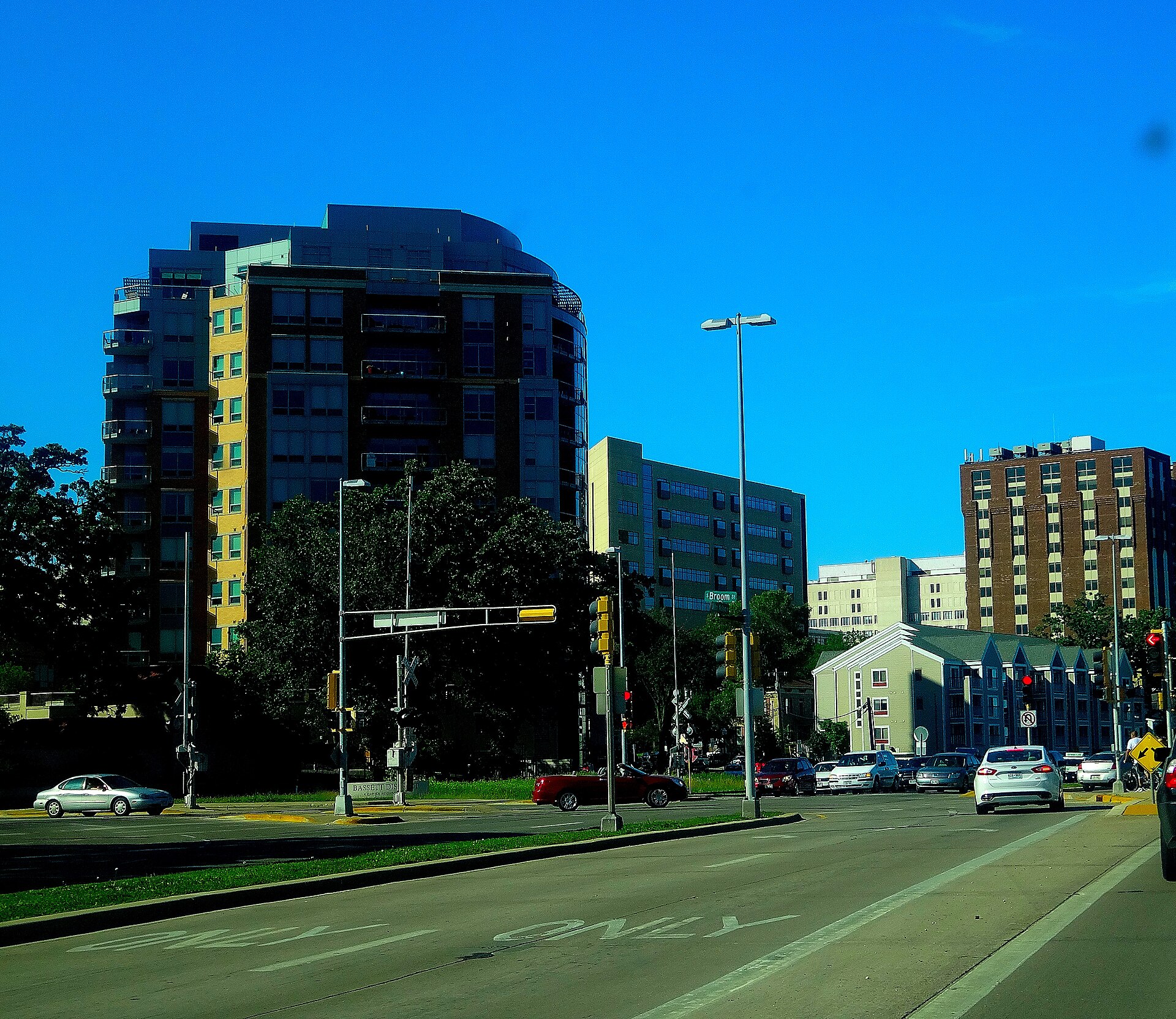
Madison's traffic is a geography problem with no complete solution, and every resident knows the shape of it: the city is split by an isthmus barely a mile wide, the state Capitol sits in its middle, and every east-west trip must either thread the isthmus — down East Washington Avenue or around the lakes — or swing south on the Beltline. Add a flagship university and a state government to the same ground, and the miracle is that it moves at all.
The isthmus routes are the daily chess match. East Washington carries the capitol corridor's volume from the interstate to the Square. John Nolen Drive — the lakeside causeway into downtown along Monona Bay, with its skyline view that still catches newcomers off guard — funnels the south side into the center. Wilson and Williamson streets carry the near-east neighborhoods; University Avenue carries the west side to campus. Around them all, the Capitol Square's one-way loop distributes the downtown circulation, and the city's bus system — now anchored by the Metro Transit network and its bus rapid transit line along East Washington — moves the share of Madison that doesn't drive.
The bicycle is Madison's third system, and November is its sorting month: the Capital City Trail, the Southwest Path and the lake loops thin to the winter commuters — a substantial, studded-tire faithful in America's platinum-rated bicycle city — while the city's bike-share docks down for the season. The alternate-side parking rules that begin in mid-November exist for the snow fleet; they govern the street grid until March and are enforced with a diligence every resident learns exactly once.
Election Day, Tuesday, Nov. 3, fits the pattern tightly: polls are open until 8 p.m. — later than the evening peak's end — and polling places across the isthmus neighborhoods will add their traffic to the homeward flow. Madison voters should plan the polling stop as part of the commute, not after it; anyone in line at 8 p.m. still votes, but the line forms earlier in the neighborhoods where the parking is tightest.
This desk will cover Madison's traffic as the civic system it is: confirmed crashes and closures, Metro service changes, snow emergencies declared and lifted, and the long politics of the isthmus itself. Geography is destiny here; the least a newspaper can do is publish the map.